
Prepare
Trim away any thick, hard pieces of fat from the pork butt, leaving the softer fat that will render as it cooks. Coat the pork generously on every side with the seasoning rub.
About 10 min
Smoke
Preheat the smoker to 250°F using applewood or another mild fruitwood.
About 15 minInsert a leave-in meat thermometer into the thickest part of the pork without touching the bone. Set the pork fat side up directly on the smoker grate and cook until the center reaches 160°F, about 3 to 5 hours.
About 240 min
Wrap
Layer several wide sheets of heavy-duty aluminum foil on a large baking sheet. Place the pork in the center, fat side up, and lift the foil around it to form a shallow boat. Pour the apple cider over the pork.
Seal the foil tightly around the pork, keeping the thermometer probe in place and the cider inside the packet. Return the wrapped pork to the smoker, fat side up.
Finish smoking
Continue cooking at 250°F until the pork reaches 204°F and feels very tender, about 3 to 4 more hours.
About 210 min
Rest
Remove the pork from the smoker and let it rest inside the sealed foil for 45 minutes.
About 45 min
Pull and serve
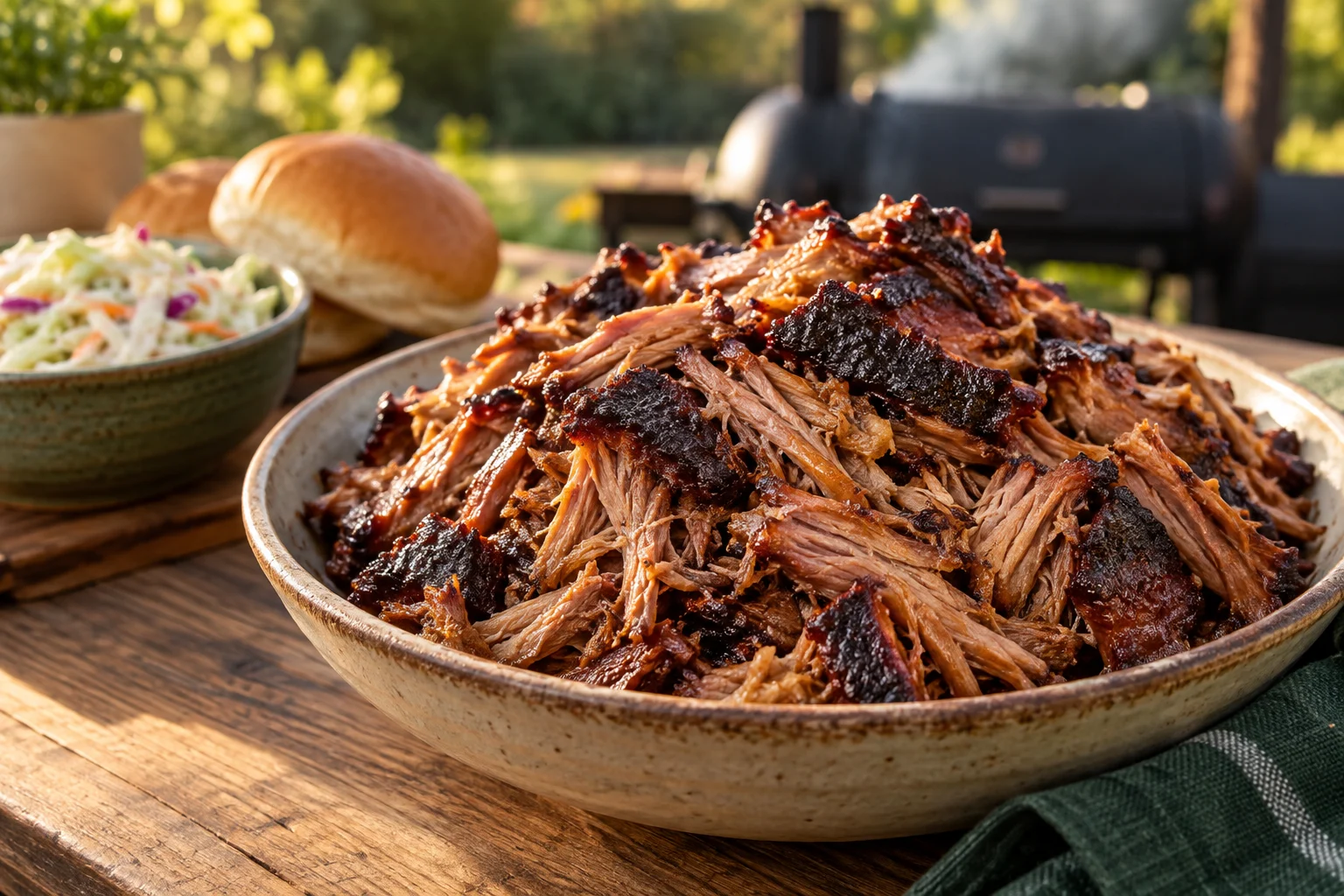
Open the foil and carefully pour the cooking liquid into a fat separator. Shred the pork, discarding the bone and any large pieces of unrendered fat. Stir the defatted cooking liquid back into the meat.
Serve the pulled pork on its own, in sandwiches, or in your favorite barbecue dishes.